Custom Online 3D Printing Services
Professional Plastic 3D Printing for Low-Volume Production
Get high-quality 3D printed plastic components with fast turnaround. Our plastic additive manufacturing service delivers durable, functional parts directly from your CAD files.
Rapid Plastic 3D Printing Prototypes
Accelerate Your Product Development with Custom Plastic 3D Print
Our plastic 3D printing rapid prototyping lets you validate designs within 24 hours without tooling. Advantages include:
• Fast Turnaround: Receive functional 3D printed plastic parts in hours to days.
• Cost-Effective: Zero mold fees, ideal for low-volume production and iterative design.
• Risk-Free Iteration: Modify and reprint designs freely, perfect for rapid manufacturing cycles.
• Complex Geometry: Easily produce intricate structures that traditional methods cannot handle.
We provide plastic 3D print production services for concept validation, functional testing, and low-volume end-use components.
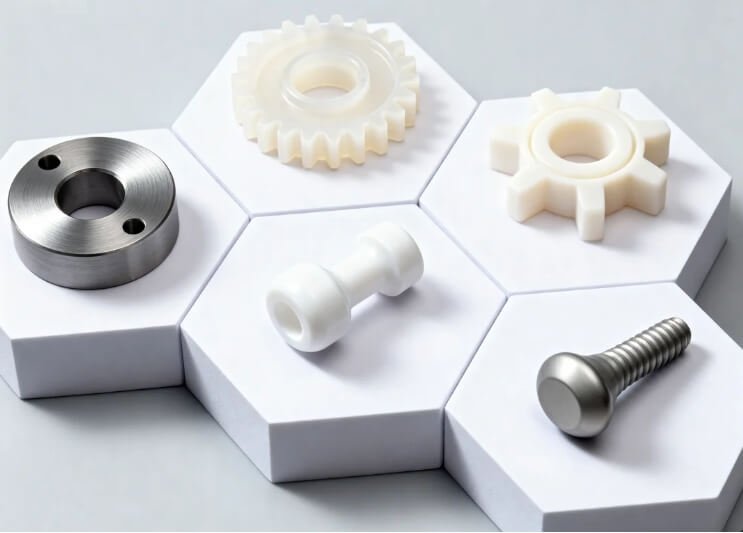
Plastic 3D Printing Technologies
Match the Right Process to Your Project Needs
FDM (Fused Deposition Modeling) – Economical & Versatile
• How It Works: Extrudes thermoplastic filaments like ABS or PLA layer by layer.
• Advantages: Simple operation, low cost, wide material colors.
• Applications: Concept models, design testing, educational models, simple prototypes.
• Note: Layer lines are visible; strength and precision are moderate.

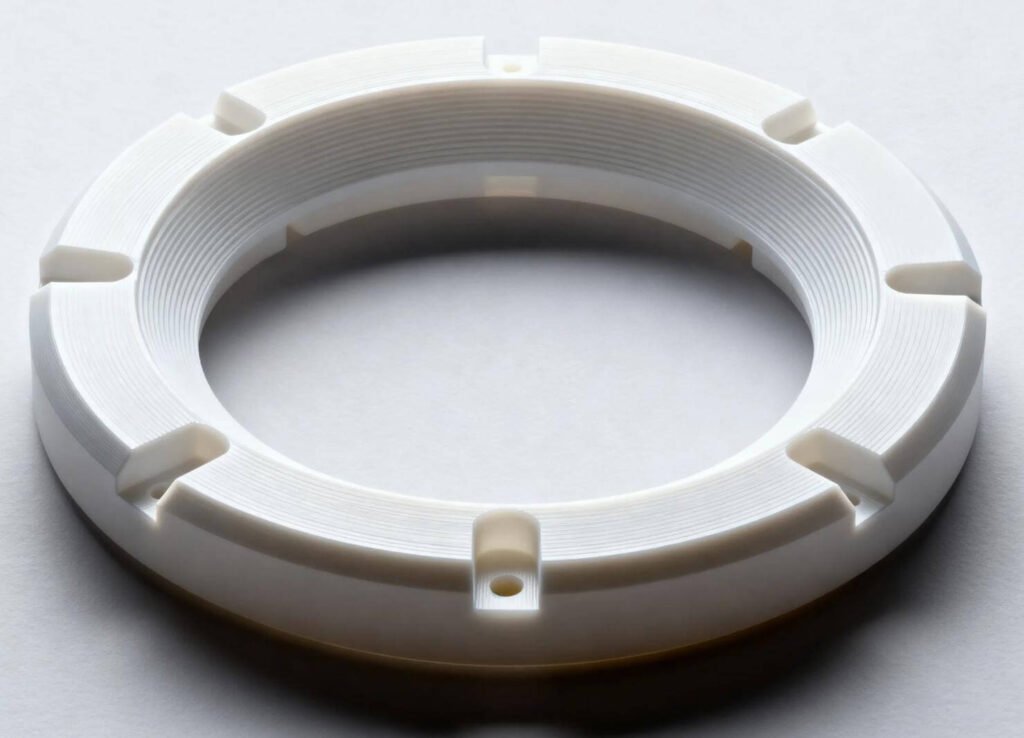
SLA (Stereolithography) – High Precision & Detail
• How It Works: Laser cures liquid photopolymer resin layer by layer.
• Advantages: Exceptional surface finish, fine detail reproduction.
• Applications: Appearance models, precise assembly testing, sculpture, master molds.
• Note: Resin may degrade outdoors over time.
H3: SLS (Selective Laser Sintering) – Strong Functional Parts
• How It Works: High-energy laser fuses nylon powder into robust parts.
• Advantages: No support structures needed, high mechanical performance, heat-resistant, complex geometries possible.
• Applications: High-strength functional prototypes, small-batch end-use components, custom jigs and fixtures.
• Note: Matte surface; post-processing may be needed for smooth finish.
MJF (Multi-Jet Fusion) – Efficient Production
• How It Works: Inkjet arrays apply fusing and detailing agents to nylon powder, then heat consolidates layers.
• Advantages: Fast, isotropic strength, better surface finish than SLS.
• Applications: Low-volume plastic 3D print production, functional parts, automotive components.
Unsure which process fits your project? Contact our technical team for a plastic 3D print online quote tailored to your design, budget, and timeline.

SLA (Stereolithography) – High Precision & Detail
• How It Works: Laser cures liquid photopolymer resin layer by layer.
• Advantages: Exceptional surface finish, fine detail reproduction.
• Applications: Appearance models, precise assembly testing, sculpture, master molds.
• Note: Resin may degrade outdoors over time.
H3: SLS (Selective Laser Sintering) – Strong Functional Parts
• How It Works: High-energy laser fuses nylon powder into robust parts.
• Advantages: No support structures needed, high mechanical performance, heat-resistant, complex geometries possible.
• Applications: High-strength functional prototypes, small-batch end-use components, custom jigs and fixtures.
• Note: Matte surface; post-processing may be needed for smooth finish.
Plastic 3D Printing Materials
Select Materials for Optimal Performance
PLA – Entry-Level Ideal
Eco-friendly, easy to print, dimensionally stable, great for concept models and display parts.
Key Characteristics: Made from renewable resources such as corn, PLA is environmentally friendly and emits no odor during printing
Main Advantages: Easy to print, excellent dimensional stability, available in a wide range of colors.
Typical Applications: Concept models, visual prototypes, design education, and non-load-bearing creative pieces.
ABS – Durable Functional Parts

Stronger and tougher than PLA; suitable for functional testing, housings, and assembly verification.
Key Characteristics: Stronger and tougher than PLA, ABS is a widely used engineering plastic.
Main Advantages: Excellent mechanical properties, wear resistance, and can be post-processed (e.g., acetone polishing).
Typical Applications: Functional test parts, housing assemblies, automotive prototypes.
Nylon (PA11/PA12) – Industrial-Grade
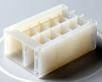
Excellent strength, fatigue resistance, near-injection molding performance. Perfect for snap-fits, end-use components, and functional prototypes.
Key Characteristics: Offers outstanding strength, toughness, and fatigue resistance, making it one of the most versatile industrial 3D printing materials.
Main Advantages: Mechanical performance comparable to injection-molded parts, low friction, lightweight.
Typical Applications: Complex functional prototypes, snap-fit assemblies, custom jigs and fixtures, low-volume end-use components.
TPU – Flexible & Elastomeric

High elasticity, tear-resistant, ideal for soft pads, grips, shock-absorbing parts, and flexible plastic 3D printing.
Key Characteristics: A flexible elastomer with excellent impact absorption and shock resistance.
Main Advantages: High elasticity, tear resistance, anti-slip, and abrasion resistance.
Typical Applications: Soft pads, protective gear, shock-absorbing packaging, flexible grips, and deformable components.
Standard Photopolymer Resin – High Precision
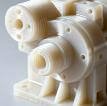
Smooth surface, fine detail for display models, sculptures, or rapid molds.
Key Characteristics: Delivers exceptional printing accuracy and smooth surface finish through photopolymerization.
Main Advantages: Outstanding detail resolution, smooth surface texture, fast curing speed.
Typical Applications: Precision visual models, display prototypes, artistic sculptures, rapid mold fabrication.
Tough Resin – Strong & Impact Resistant
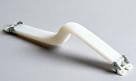
High durability, suitable for repeated assembly, functional snap-fits, and mechanical prototypes.
Key Characteristics: Maintains the high precision of standard resin while significantly improving strength and impact resistance.
Main Advantages: Combines toughness with accuracy, simulates the mechanical properties of polypropylene (PP).
Typical Applications: Functional prototypes under stress, snap-fit parts, enclosures, and connectors.
Metals – Stainless Steel & Titanium

Key Characteristics: Offers excellent strength, corrosion resistance, and cost-effectiveness.
Main Advantages: High strength, corrosion resistance, relatively low cost.
Typical Applications: Mold inserts, industrial components, medical prototypes, corrosion-resistant piping.
Titanium Alloy (Ti64)

Key Characteristics: A lightweight, high-strength metal with superior strength-to-weight ratio and excellent biocompatibility.
Main Advantages: High strength, lightweight, heat and corrosion resistance, excellent biocompatibility.
Typical Applications: Aerospace components, racing parts, customized medical implants (e.g., bone structures), and high-performance tools
Post-Processing for Plastic 3D Printing
Enhance Appearance, Strength, and Durability
Prototype: Functional parts without aesthetic focus.
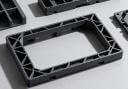
Painting: Color options and surface protection.

Polishing: Smooth visible surfaces for premium finish.
Electroplating: Metal coating for strength, wear-resistance, or conductivity.

Why Choose Our Plastic 3D Printing Service?
• Instant online quotes and rapid turnaround.
• Low-volume production and custom plastic parts.
• Functional parts, housings, enclosures, snap-fits, and more.
• Expert guidance for design, material, and process selection.
Get your custom plastic 3D print now – high quality, low cost, fast delivery.